

Starting a journey with holistic wellness is the most effective way to keep your body active and your mind calm without any unnecessary stress. When you practice yoga standing poses you feel a natural surge of power and stability flowing through your entire nervous system.
These movements are the true foundation of modern fitness because they work on your legs and core while simultaneously improving your mental focus.
You do not need any fancy equipment or expensive gym memberships to start your yoga standing poses because your own body weight provides all the resistance required for toning.
Making these a habit will help you stand taller and feel more confident in everything you do throughout your busy day.
What is yoga standing poses?
Yoga standing poses are specific physical postures where your feet are the primary foundation touching the ground. In these exercises your legs carry the weight of your entire body which helps to build functional strength and solid stability.
These poses are usually the first thing people learn in a yoga class because they teach you how to align your bones and muscles correctly.
Unlike seated or lying positions these active shapes require you to engage your core and balance your weight while standing tall.
Read More 10 Best Yoga Balance Poses to Build Core Strength
How to Practice Yoga Standing Poses Perfectly?
- Establish a Strong Base: You should begin by placing your feet firmly on the ground and feeling the weight evenly distributed on all four corners of each foot to create a solid foundation.
- Lengthen Your Spine: Keep your spine long and reach the crown of your head toward the sky to improve your posture and create space between your vertebrae.
- Relax Your Upper Body: Focus on relaxing your shoulders away from your ears to avoid unnecessary tension in your neck and upper back while holding the posture.
- Use Support When Needed: Using a wall for support is a very smart way to stay safe and maintain proper alignment while you are still building up your leg strength and stamina.
- Engage Your Core: Always remember to engage your abdominal muscles to protect your lower back and maintain stability during every movement you perform.
- Focus on Your Breath: Maintain deep and steady breathing to help your muscles relax into the stretch and keep your mind calm throughout the practice.
Variations of Yoga Standing Poses for All Levels:
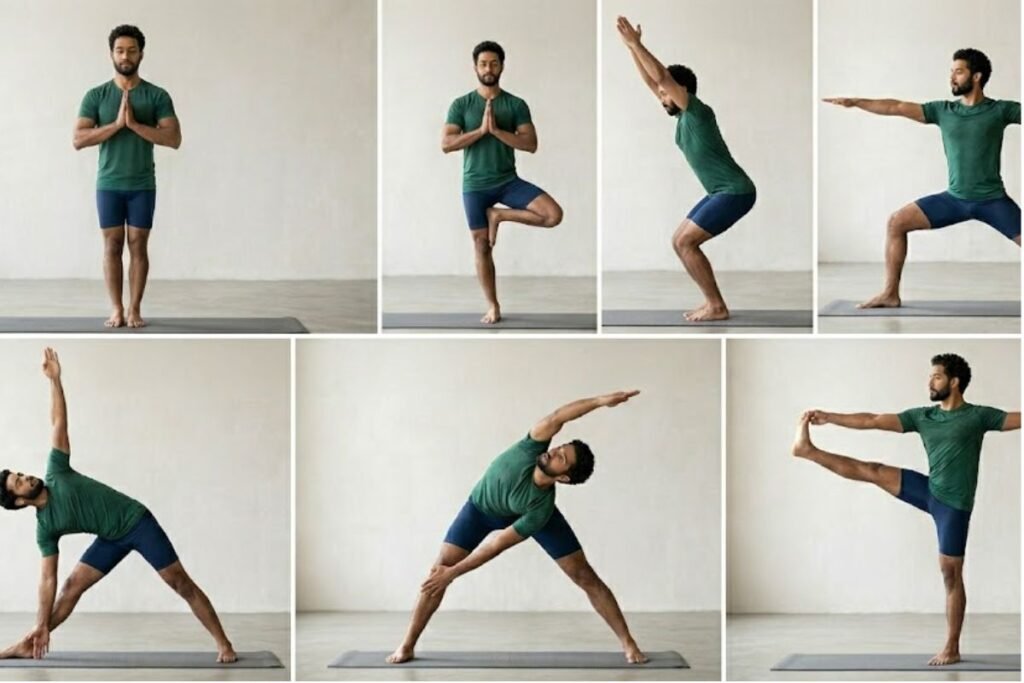
Learning these basic moves is the best way to start a strong yoga routine that makes your body feel powerful and your mind stay calm. You can follow these simple steps to get your posture exactly right and enjoy all the natural health benefits that come with every single stretch.
Mountain Pose: (Tadasana)
This is the base of all yoga standing poses and teaches you how to stand with perfect alignment and poise. To perform this you must bring your big toes to touch while keeping your heels slightly apart and distributing your weight evenly across both feet. Engage your thigh muscles and tuck your tailbone slightly while reaching the crown of your head toward the sky. Keep your arms straight at your sides with palms facing forward to open your chest and breathe deeply into your belly.
Warrior I: (Virabhadrasana I)
This powerful posture builds incredible heat and strength in the lower body while stretching the entire front side of your torso. You start by stepping one foot back about four feet and turning the back toes out at a forty five degree angle. Bend your front knee so it stays directly over your ankle and reach your arms high toward the ceiling with palms facing each other. Keep your hips facing forward like headlights to ensure you are building core stability and leg power simultaneously.
Warrior II: (Virabhadrasana II)
Unlike the first variation this pose focuses on opening the hips and strengthening the shoulders and arms through deep holds. Stand with your feet wide apart and turn your front foot out while keeping the back foot parallel to the edge of your mat. Extend your arms out to the sides at shoulder height and gaze softly over your front middle finger. This movement is excellent for building stamina and teaching your mind to stay calm during physical challenges.
Tree Pose: (Vrksasana)
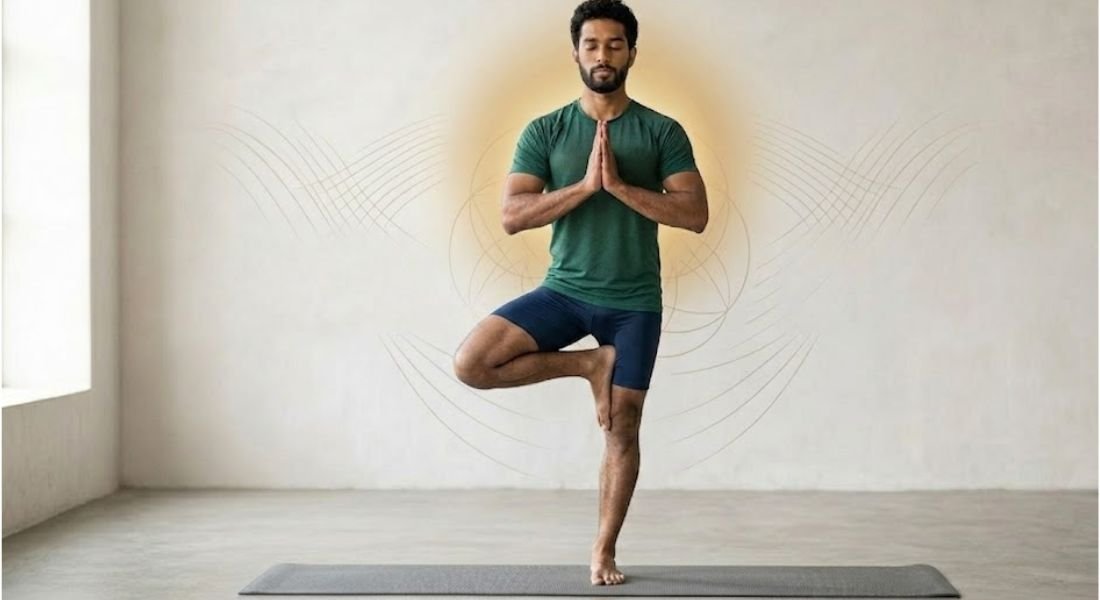
One of the most famous yoga standing poses for balance is the Tree Pose which improves your mental concentration and ankle stability. Stand on your right leg and place the sole of your left foot on your inner right calf or thigh but never directly on the knee joint. Bring your hands together at your heart center or reach them up like branches while fixing your eyes on a steady object in front of you. This helps to quiet the mind and creates a sense of grounded peace within your body.
Triangle Pose: (Trikonasana)
This triangle pose is essential for stretching the hamstrings and opening the side body while improving the flexibility of your spine. With your feet wide apart reach your front arm forward and then down toward your shin or a block while reaching the other arm toward the sky. Keep both legs straight and imagine your body is pressed between two panes of glass to maintain a flat and open alignment. It is a fantastic way to energize the body and improve your sense of space and direction.
Extended Side Angle: (Utthita Parsvakonasana)
This movement creates a long line of energy from your back heel all the way to your extended fingertips. Start in a wide stance with one knee bent and place your forearm on your thigh or reach your hand down to the floor. Sweep your top arm over your ear and look up toward the ceiling to expand your chest and lungs. This pose builds intense leg strength and provides a deep stretch for the obliques and intercostal muscles.
Chair Pose: (Utkatasana)
Often called the fierce pose this exercise tones the legs and glutes while building internal heat very quickly. Stand with your feet together and bend your knees deeply as if you are trying to sit back into a small invisible chair. Reach your arms high next to your ears and keep your weight in your heels so you can still see your toes. This is a great way to strengthen the lower back and improve your overall physical endurance.
Forward Fold: (Uttanasana)
This is a relaxing yet powerful stretch that releases tension from the entire back of the body including the neck and hamstrings. Stand tall and exhale as you fold forward from your hip joints rather than your waist to keep the spine long. Let your head hang heavy and rest your hands on the floor or hold onto opposite elbows to allow gravity to deepen the stretch. It is the perfect way to calm the nervous system and lower your blood pressure naturally.
Pyramid Pose: (Parsvottanasana)
This posture provides an intense stretch for the hamstrings and requires significant balance and hip squaring. Step one foot back about three feet and keep both legs completely straight while folding your torso over your front leg. You can place your hands on your shins or the floor to support your weight as you breathe into the back of your thighs. This pose is excellent for improving posture and relieving stiffness in the lower half of the body.
Eagle Pose: (Garudasana)
This is a complex balancing pose that works on joint health and deep focus by squeezing the limbs toward the midline. Bend your knees slightly and wrap your left leg over the right leg while hooking the foot behind your calf if possible. Cross your arms at the elbows and wrists in front of your face and lift your elbows toward shoulder height. This movement creates space in the back of the shoulders and helps to improve the circulation of fluid to your joints.
Warrior III: (Virabhadrasana III)
This advanced balancing pose requires you to stand on one leg while making your body look like the letter T. Start in a lunge and lean forward while lifting your back leg off the ground until it is parallel to the floor. Reach your arms forward to create a long line of energy from your fingertips to your back heel. It is an incredible way to build core strength and improve your overall body coordination.
Half Moon Pose: (Ardha Chandrasana)
This pose challenges your balance by asking you to stand on one leg while reaching one hand to the floor and the other to the sky. Open your hips and chest to the side and keep your lifted leg very active and straight. This exercise strengthens the ankles and thighs while opening the chest and improving your sense of balance. It is often practiced with a block under the bottom hand to help maintain proper alignment.
High Lunge: (Ashta Chandrasana)
This dynamic pose is perfect for building lower body strength and stretching the hip flexors of the back leg. Stand with one foot forward and the other foot back with the back heel lifted off the ground. Bend your front knee and reach your arms toward the sky while keeping your torso upright and strong. It helps to improve balance and prepares the body for more intense backbending postures.
Goddess Pose: (Utkata Konasana)
This wide legged squat is famous for building power in the inner thighs and opening the hips effectively. Stand with your feet wide and turn your toes out toward the corners of your mat. Bend your knees deeply and bring your arms into a goalpost shape while keeping your spine straight and tall. It is a very empowering pose that builds physical heat and improves the flexibility of the pelvic floor.
Standing Split: (Urdhva Prasarita Ekapadasana)
This pose offers a very deep stretch for the hamstrings and challenges your balance on a single leg. From a forward fold lift one leg as high as possible toward the ceiling while keeping your torso close to your standing leg. You can hold your standing ankle with one hand to increase the intensity of the stretch. It helps to improve blood flow to the brain and creates a great deal of flexibility in the lower body.
Why Are Yoga Standing Poses Important for Health?
The most important reason to practice is the functional strength that helps you move better in your daily real life activities. These postures build strong bones by using weight bearing techniques and improve the circulation of blood to your vital organs which keeps you healthy.
You will also find that your balance becomes much sharper which prevents accidental falls and injuries as you move through different stages of life.
Regular practice also helps in regulating the digestive system and boosting the immune response of your body.
Read More Cobra Pose Yoga – Guide to Strengthen Spine Fast
Conclusion:
Taking these yoga standing poses into your daily life is one of the best gifts you can give to your health and happiness. You do not need to be an expert to start because every small movement helps your body grow stronger and your mind feel more peaceful.
Standing tall on your mat teaches you how to stay balanced and calm even when things feel a bit shaky in the real world. You will soon notice that your legs feel lighter and your energy stays high from the moment you wake up until you go to sleep.
Just a few minutes of practice every day is enough to see a huge difference in how you move and breathe naturally.
FAQs:
Can I practice yoga standing poses on a regular floor?
You can definitely practice on any flat surface but using a non-slip mat helps prevent your feet from sliding during wide stretches. A firm and even ground is the most important thing to keep your ankles safe and your balance steady.
Are these poses safe to do during a pregnancy?
Many of these moves are great for staying active but you should always use a wall for extra support to avoid falling. It is also smart to keep your feet a bit wider apart to create more space for your body to move comfortably.
How many times a week should I do yoga standing poses?
Practicing three to four times a week is a perfect way to build strength without making your muscles feel too tired. Consistency is the secret to seeing fast progress in your flexibility and your ability to stay balanced.
Do yoga standing poses help in increasing height?
While they cannot change your bone length they do wonders for your posture which makes you stand at your full natural height. By straightening your spine and opening your shoulders you will immediately look and feel taller.
