

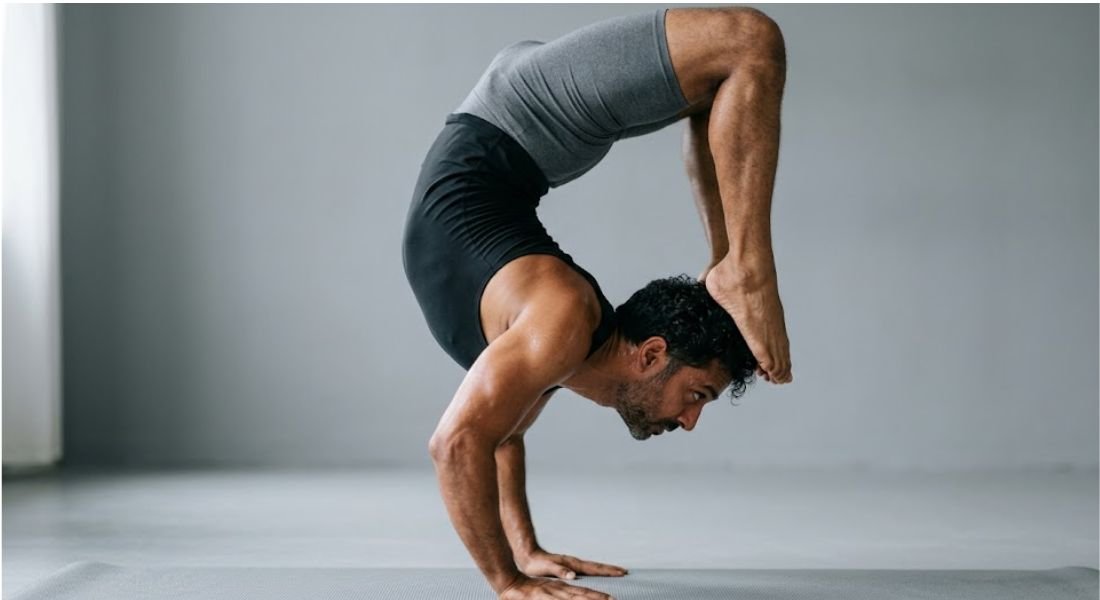
The hardest yoga poses are the ultimate test of how far your mind and body can go when they work in perfect harmony. Many people are drawn to the hardest yoga poses because they offer a massive sense of achievement and a workout that builds incredible functional power.
These moves aren’t just about showing off; they require years of patience, deep core stability and a fearless attitude. When you start working toward the hardest yoga poses, you quickly realize that your breath is your best friend in keeping you steady.
It is a journey that transforms your physical stamina and teaches you how to stay calm even when your muscles are shaking.
What Defines the Hardest Yoga Poses?
The hardest yoga poses are usually elite-level movements that combine extreme flexibility, intense core strength, and rock-solid balance. In the world of advanced fitness, these are often deep arm balances, complex inversions, or extreme backbends that push the human frame to its limits.
What makes them the hardest yoga poses is the “micro-alignment” required—if your finger or toe is just an inch out of place, the whole pose can collapse.
These postures demand a quiet mind and a high level of body awareness that only comes with consistent, long-term practice on the mat.
Read More Dolphin Pose Yoga – Build Real Upper Body Power
Why Should You Work Toward the Hardest Yoga Poses?
Even if you can’t nail them yet, practicing the steps toward the hardest yoga poses offers incredible health benefits. On a physical level, these moves build “super-strength” in your stabilizer muscles and significantly improve your bone density through intense weight-bearing.
They also force your nervous system to become more resilient, which helps you handle stress much better in your everyday life.
Many practitioners find that attempting the hardest yoga poses boosts their self-confidence and teaches them that obstacles are just opportunities for growth. It is a natural way to sharpen your mental focus and build a body that feels nearly unbreakable.
Safely Practice the Hardest Yoga Poses: Step by Step
- Always start with a 15-minute full-body warm-up to get your blood flowing before trying any of the hardest yoga poses.
- Use props like blocks, straps, or a wall to build the necessary muscle memory without risking a fall.
- Focus on your “Bandhas” or internal energy locks by pulling your core in tight to create a stable center of gravity.
- Move into the pose slowly and stop immediately if you feel any sharp pain or if your breath becomes short and shallow.
- Practice the “prep poses” first—for example, master a standard plank before trying an advanced arm balance.
- Use a spotter or a padded surface like a thick mat to protect your head and neck during difficult inversions.
- Always finish your session with a counter-stretch, like child’s pose, to let your nervous system settle back down.
10 Elite Variations of the Hardest Yoga Poses:
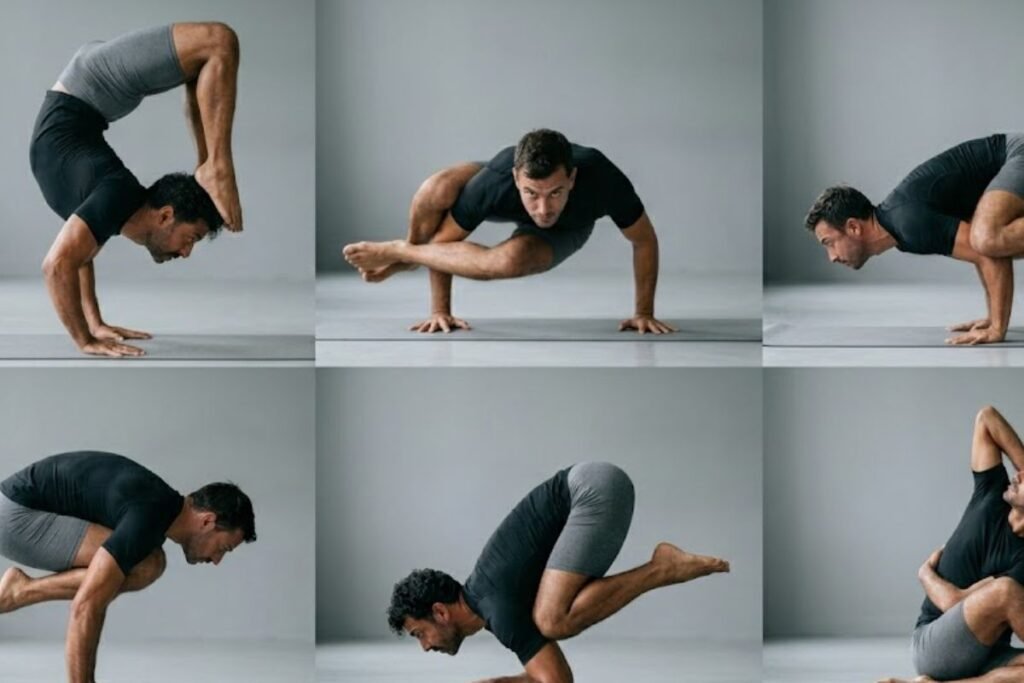
Handstand: (Adho Mukha Vrksasana)
The handstand is one of the most iconic and hardest yoga poses because it requires total body integration. To do this, you must balance your entire weight on your hands while keeping your legs stacked perfectly over your shoulders.
It is a massive test of shoulder stability and core control that takes most people months or years to hold steadily in the middle of the room.
Scorpion Pose: (Vrschikasana)
This is a breathtaking backbend where you balance on your forearms and bend your legs over your head until your feet touch your crown.
It is considered one of the hardest yoga poses because it combines the balance of a forearm stand with the extreme flexibility of a deep backbend. It requires a very strong back and a fearless heart to stay upside down while arching so deeply.
Peacock Pose: (Mayurasana)
In this arm balance, you balance your horizontal body on your elbows, which are tucked deep into your stomach. This is one of the hardest yoga poses for your wrists and core because you have to keep your legs and torso perfectly straight like a table.
It is famous for detoxifying the internal organs due to the intense pressure applied to the abdomen during the hold.
Firefly Pose: (Tittibhasana)
Firefly pose asks you to balance on your hands while sitting your hips back and extending your legs out straight in front of you.
It is one of the hardest yoga poses for your hamstrings and hip flexors. You need a lot of arm strength to keep your bottom off the floor and a very tight core to stop your legs from dropping.
King Pigeon: (Eka Pada Rajakapotasana IV)
This pigeon yoga is an elite backbend that involves reaching back with both hands to grab your back foot while staying balanced on your front leg.
It is one of the hardest yoga poses for hip mobility and spine health. The balance is tricky because you are reaching behind your field of vision while trying to keep your chest facing forward.
Flying Pigeon: (Eka Pada Galavasana)
Flying pigeon is a mix of a deep hip opener and a powerful arm balance. You place one shin across your triceps and lean forward until your back leg lifts off the mat into the air.
It is one of the hardest yoga poses because it requires both “open” hips and “strong” arms to stay in the air without falling forward.
One-Legged Arm Balance: (Koundinyasana II)
In this dynamic move, you balance on your hands while splitting your legs—one extended forward over an arm and the other reaching straight back. It is one of the hardest yoga poses because it targets the obliques and inner thighs with extreme intensity. Keeping the back leg lifted requires a massive amount of glute and core power.
Eight-Angle Pose: (Astavakrasana)
This pose involves hooking your legs around one arm and extending them to the side while balancing on your hands. It looks incredibly complex and is one of the hardest yoga poses for coordination. You have to keep your core engaged and your gaze forward to maintain the “lever” effect that keeps your hips off the ground.
Formidable Pose: (Gandha Bherundasana)
This is an extreme chin stand where your chest and chin are on the floor while your legs arch over your head to touch your forehead. It is widely ranked as one of the hardest yoga poses because of the pressure it puts on the neck and the flexibility needed in the spine. This move should only be practiced under the guidance of a very experienced teacher.
Side Crane Pose: (Parsva Bakasana)
While regular crow pose is a beginner move, the side version is much more difficult. You balance both knees on the outside of just one arm, which requires a deep spinal twist and incredible oblique strength. It is one of the hardest yoga poses for those working on their twisting ability and upper body endurance.
Common Mistakes to Avoid with the Hardest Yoga Poses
A huge mistake people make is trying to “jump” into the hardest yoga poses before their muscles are actually strong enough to hold the weight. This often leads to wrist strain or shoulder pinches that can set your practice back for weeks.
Another issue is holding your breath; when you stop breathing, your muscles tense up and you lose your balance much faster.
Always remember to use your fingers like claws on the mat to help distribute the pressure. If you feel any sharp pain in your joints—especially your neck or lower back—you must come out of the pose immediately to stay safe.
How the Hardest Yoga Poses Build Mental Toughness?
Practicing the hardest yoga poses is as much a mental workout as it is a physical one. When you face a pose that seems impossible, you have to deal with fear, frustration, and the ego’s desire to look “cool.” Learning to stay calm while falling and trying again builds a level of grit that carries over into your work and personal life.
It teaches you that progress is slow and that consistency is the only way to reach your goals. By facing these physical challenges, you develop a “can-do” attitude that makes everyday stresses seem much smaller in comparison.
Read More How to Do bird of paradise yoga (Svarga Dvidasana)
Who Should Be Extra Careful with Advanced Moves?
The hardest yoga poses are not suitable for everyone, especially if you have pre-existing medical conditions. If you have high blood pressure, you should avoid long-held inversions where your head is below your heart.
People with past surgeries in the neck, back, or wrists need to be extremely cautious and probably stick to modified versions.
If you are pregnant, the extreme core pressure and twists found in these poses can be unsafe. Always talk to a doctor or a certified yoga therapist before attempting the hardest yoga poses to make sure your body is ready for the intense physical demand.
Conclusion:
The hardest yoga poses are a lifelong journey, not a destination you reach overnight. These moves prove that with enough dedication and focus, your body can perform feats that seem almost magical.
By slowly working through the variations and respecting your limits, you will find a version of yourself that is stronger, more balanced, and much more resilient. It doesn’t matter if you never master the most extreme poses the real magic happens in the effort and the focus you bring to the mat every single day.
Embrace the challenge and let the journey toward these advanced postures transform your life in a natural and powerful way.
FAQs:
What is the single hardest yoga pose in the world?
Many consider Gandha Bherundasana (Formidable Pose) the hardest because it requires a rare combination of extreme neck strength and spinal flexibility.
How long does it take to learn the hardest yoga poses?
It varies for everyone, but most people spend two to five years of consistent daily practice before they can safely hold these advanced positions.
Can I learn the hardest yoga poses at home?
It is much safer to learn the basics in a studio with a teacher, but you can practice the “preps” at home using a wall for safety.
Do these poses help with athletic performance?
Yes, they build a level of core power and “joint-safety” that is incredibly beneficial for gymnasts, climbers, and professional athletes.
