

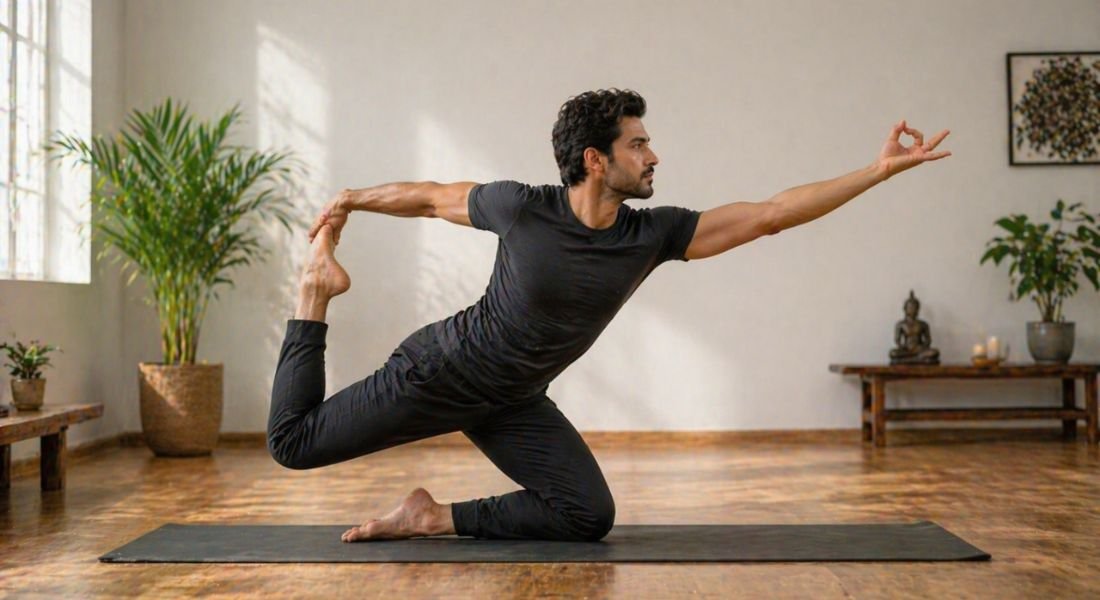
The bird of paradise yoga pose is a stunning display of grace and strength that captures the essence of a blooming tropical flower. This challenging balance helps you find deep focus while creating a firm and stable base through your standing leg during the transition.
Perfecting the bird of paradise yoga requires a blend of consistent hip opening and a deep respect for your own physical limits. By approaching this pose with a calm mind you can unlock a greater sense of inner peace and physical alignment.
It is truly the gold standard for anyone looking to elevate their spiritual journey through a more focused and stable body.
What Is the Bird of Paradise Yoga?
The bird of paradise yoga involves a specific arrangement where one leg is lifted high and extended while the arms maintain a secure bind behind the thigh in Posture Yoga.
This creates a powerful lock that keeps the spine naturally erect and helps the lungs expand fully for deep breathing. When done correctly the standing foot remains rooted firmly into the floor to form a solid support that carries the entire weight of the torso.
Why Should You Practice the Bird of Paradise Yoga?
Engaging in the bird of paradise yoga provides a massive boost to your leg strength and helps to tone the muscles in your abdominal region.
It is also famous for calming the nervous system and reducing the mental noise that often interferes with a peaceful day. Regular practice can lead to improved posture and a significant increase in the flexibility of your hamstrings and shoulders.
How to Work Up to the Bird of Paradise Yoga?
You should always start with gentle shoulder rotations and stretches like the bound side angle pose to prepare your muscles for the deep bind required. Using a strap can help bridge the gap if your hands do not meet easily and make it much easier for your chest to stay open safely. Never rush the process because your ligaments need time to adapt to the unique stresses of this advanced standing shape.
Step by Step Poses of Bird of Paradise Yoga:
Bound Side Angle Pose:
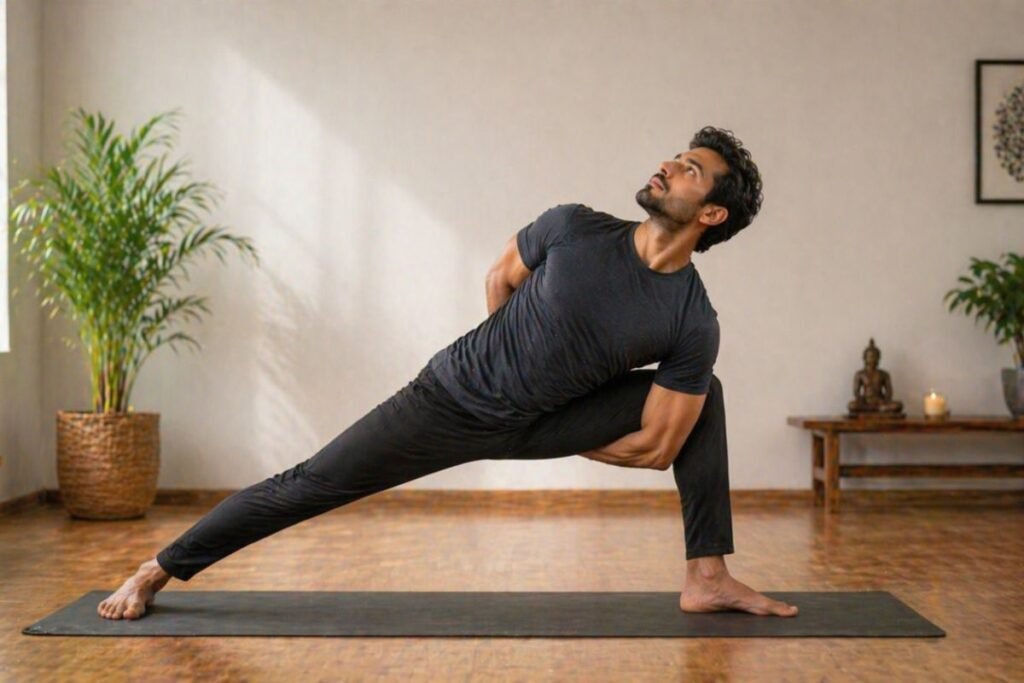
Begin your journey by entering a deep side lunge and wrapping your arms around your front leg to find a secure bind. This initial setup helps you align your spine and check your shoulder mobility before moving into the more complex lifting phase. It is the essential starting point for ensuring your body is centered and ready for the balance.
Step the Back Foot Forward:
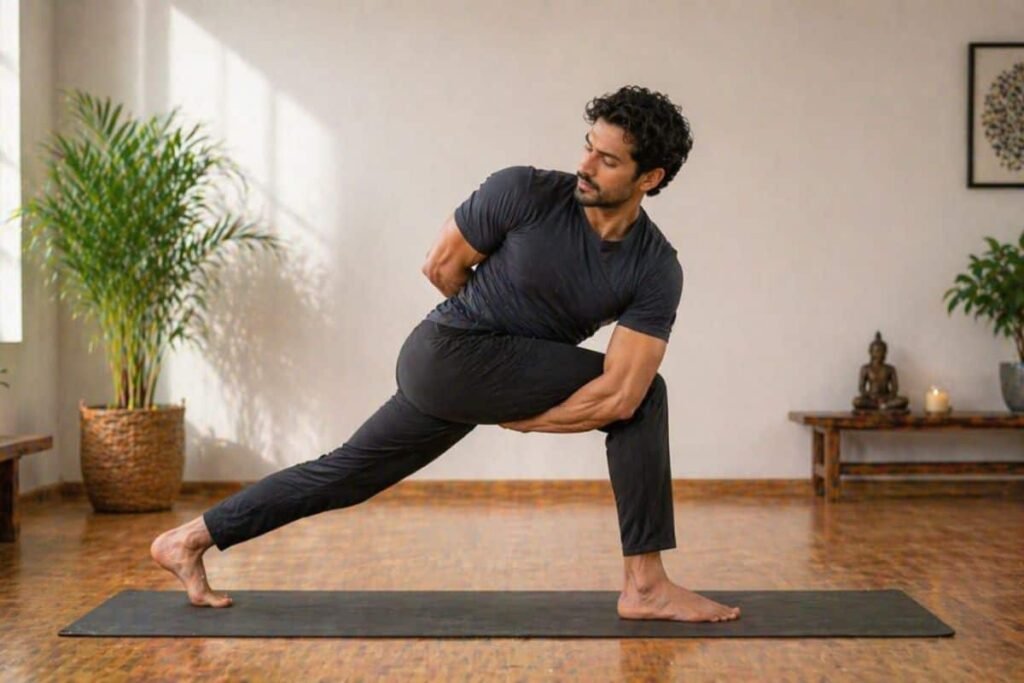
Slowly bring your back foot toward the front of your mat so both feet are parallel in a forward fold. This movement is vital because it shifts your center of gravity and prepares your standing leg for the weight of the entire body. Spending a few seconds here ensures your muscles are loose and your gaze is fixed on a steady point.
Root the Standing Foot:
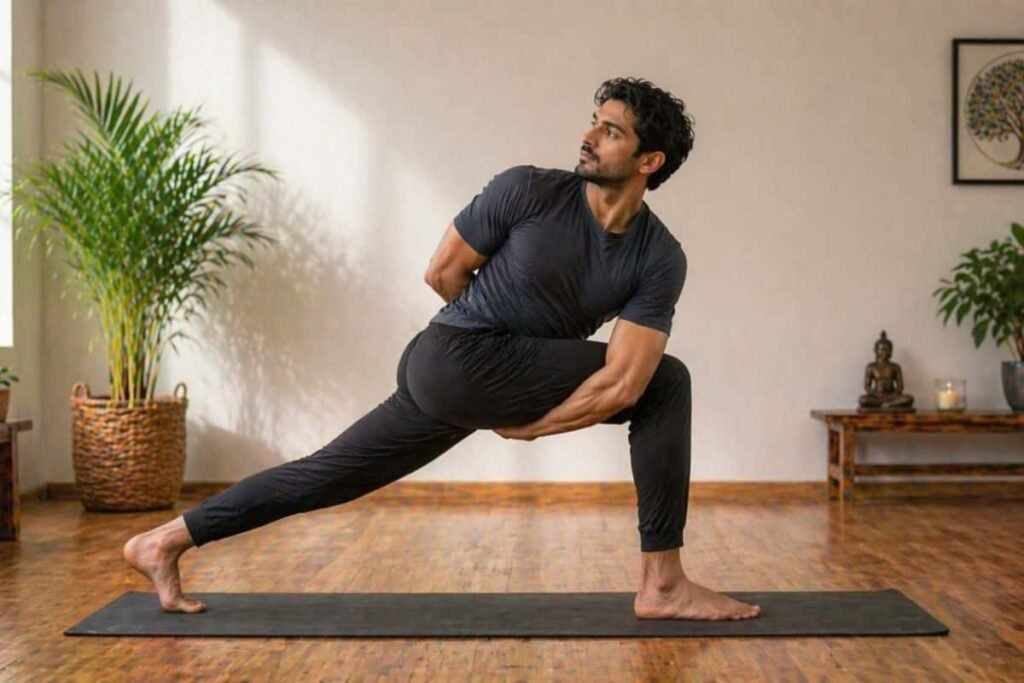
Carefully shift all your weight into the leg that is not bound while keeping your core engaged and your back straight. Keep your standing foot active and grounded to protect the ankle and ensure the base is securely locked in place. This intermediate step allows your body to adjust to the intense balance required for the full lift.
Rise to a Vertical Position:
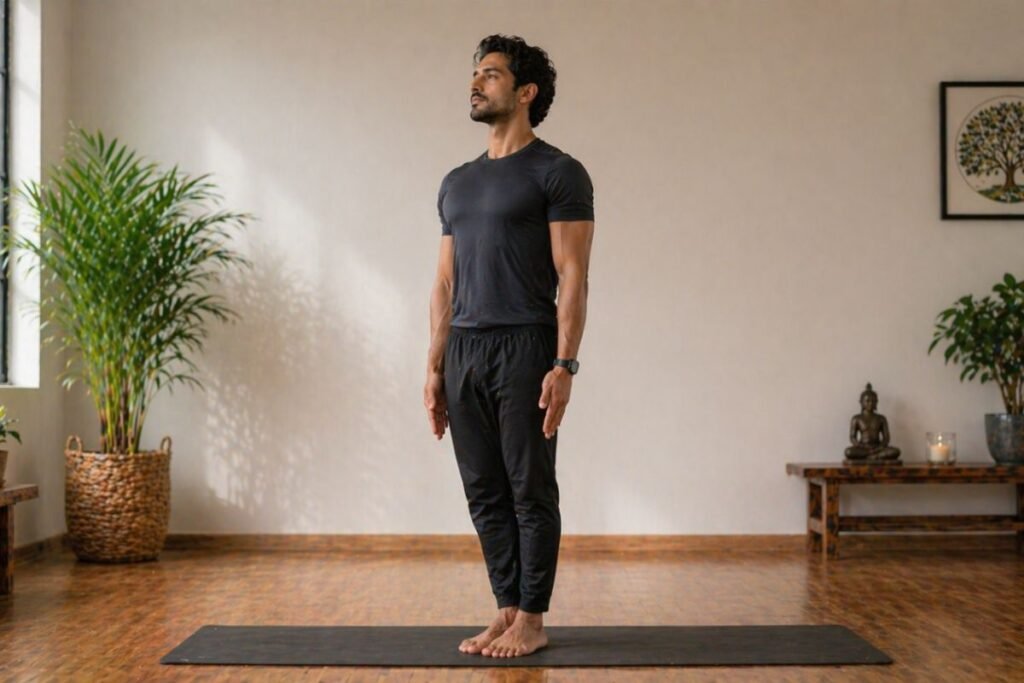
Slowly lift your torso and the bound leg off the floor to reach a tall and upright standing position. Handle this part of the process with extreme care to avoid sudden movements or joint strain. Once your spine is vertical you have achieved the primary structure of the balance.
Extend the Bound Leg:
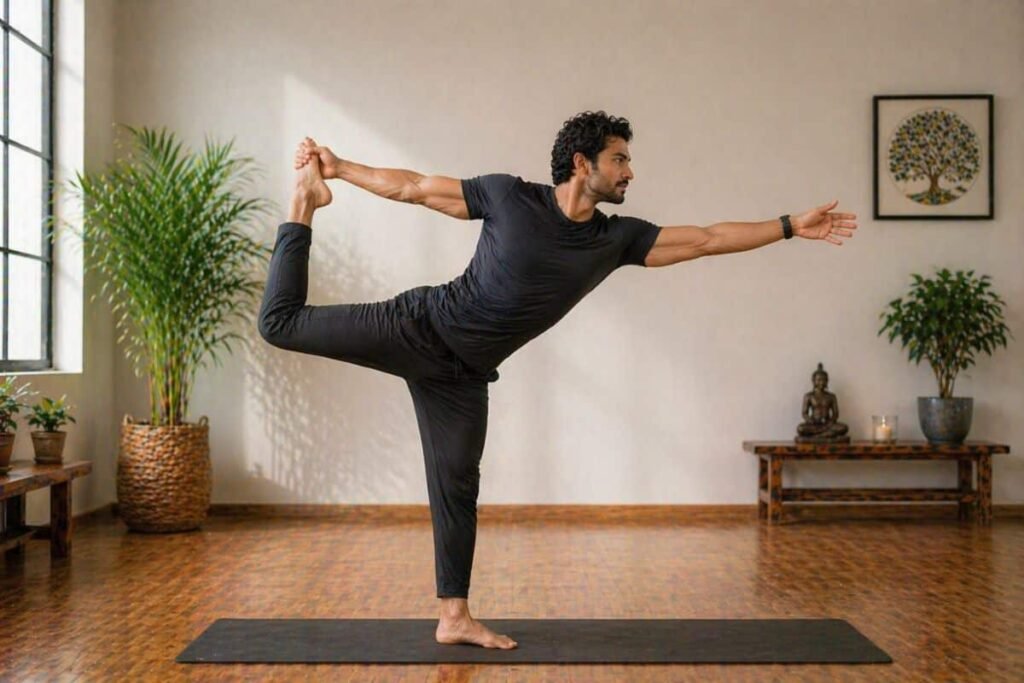
Check that your standing leg is strong before gradually straightening the lifted leg out to the side toward the sky. Your foot should reach upward comfortably without sliding out of the bind or causing any sharp pain in the groin. This specific orientation helps maintain the energy lock and stability of the entire posture.
Gaze Over the Shoulder:
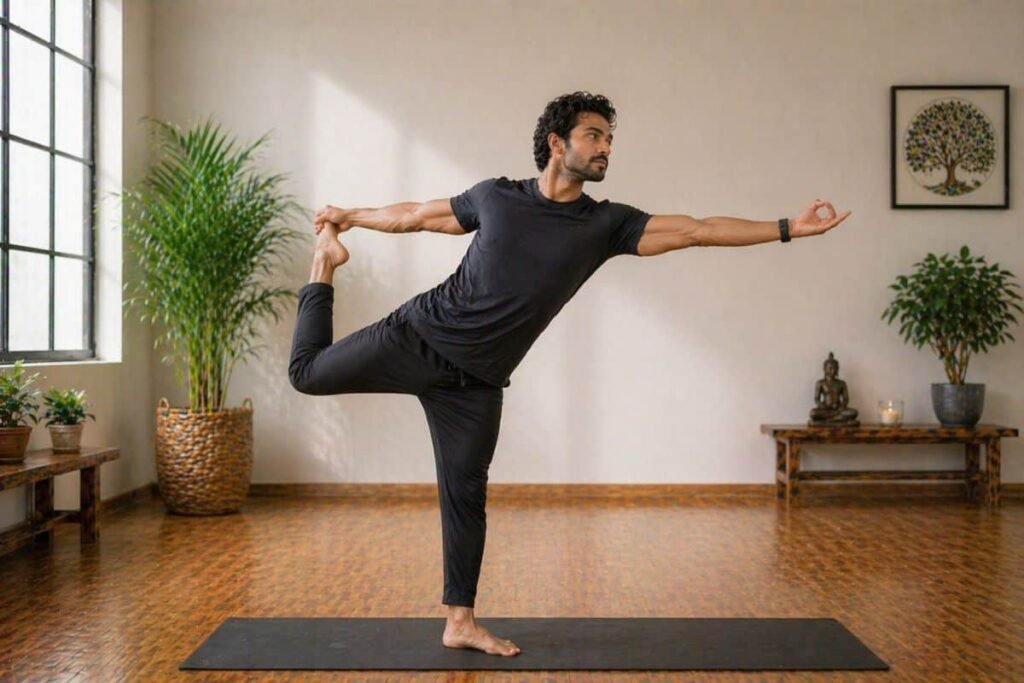
Turn your head gently to look over the opposite shoulder to find your final point of focus and stillness. Keep your shoulders relaxed and pulled away from your ears to allow for an open chest and easy breathing throughout your practice. This final touch completes the pose and prepares your mind for deep stillness and focus.
Read More Two Person Yoga Poses – To Build Strength And Connection
Benefits Of Bird Of Paradise Yoga:
Bird of paradise yoga improves body control which makes daily movements more stable and smooth. It opens the hips and lengthens the legs which helps reduce tightness from long sitting or inactivity.
The pose strengthens the core and lower body which supports better physical strength and endurance. It also helps improve posture by keeping the spine aligned and the body balanced. Regular practice enhances focus and builds confidence in both yoga practice and everyday activities.
Conclusion:
Finding the balance in the bird of paradise yoga pose is a rewarding achievement that shows your commitment to gaining strength.
This posture challenges you to remain steady under pressure while opening your heart and shoulders to a new level of physical freedom. Always remember that progress takes time and staying consistent with your daily stretches is the key to a safe and successful practice.
By focusing on your breath and respecting your body’s current limits you can enjoy the journey toward the full expression of the pose.
FAQs:
Is bird of Paradise hard yoga?
Yoga practitioners consider the bird of paradise yoga pose a challenging advanced balance because it combines a deep bind with the strength to stand on one leg. It requires a great deal of patience and hip flexibility to lift and extend the leg safely without losing your equilibrium.
What is the meaning of bird of paradise yoga?
In the world of fitness the bird of paradise yoga represents the beauty of growth and the ability to find stability even in complex situations. The tropical flower inspires the name, symbolizing freedom and the joy of gracefully reaching toward the sunlight.
Should I use a strap for bird of paradise yoga?
Using a yoga strap is a great way to bridge the distance between your hands if your shoulders are still feeling a bit tight. This allows you to maintain a straight spine and open chest without forcing a bind that might cause strain.
Does bird of paradise yoga require strong arms?
While the legs do most of the lifting your arms must be flexible enough to maintain a firm grip behind your back during the transition. The bind helps to lock your torso in place and provides the necessary leverage to keep the lifted leg steady.
