

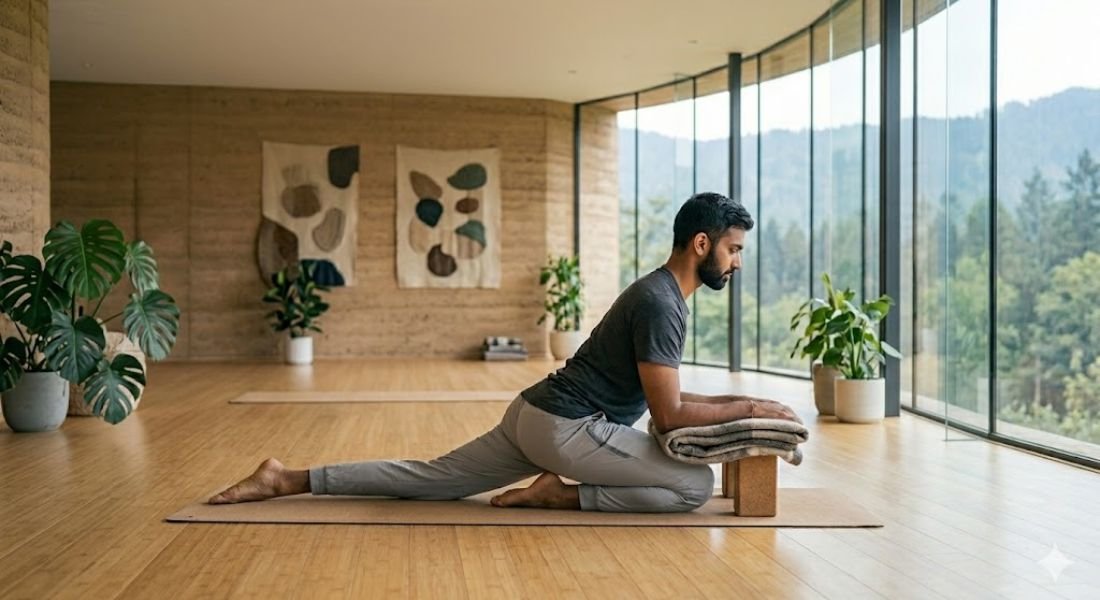
Yoga pigeon pose is one of the most effective stretches for opening tight hips and improving body balance. Practicing pigeon yoga regularly helps you release built up tension and improves your overall mobility for daily life.
This posture yoga is famous for targeting tight areas that other exercises often miss during a workout. You will find that it connects your mind and body through steady breathing and focused stretching.
It is a favorite for many because it creates a sense of space and freedom in the hips almost instantly. In a well-rounded yoga routine, it is often paired with strength-based balancing poses like Crow Pose Yoga which helps build core stability and arm strength to complement deep hip opening work.
Learning this pose correctly ensures you gain all the physical rewards while keeping your practice safe and enjoyable.
What is yoga pigeon pose and why is it important?
Yoga pigeon pose is a deep hip opening posture that stretches the glutes hip flexors and lower back. It is often practiced in yoga routines to increase flexibility and release stored tension.
This pose is important because modern lifestyle creates tight hips due to long sitting time. Tight hips can lead to pain in the lower back and poor posture.
This Yoga pose works directly on these problem areas and helps the body move freely again. Along with this Frog Pose Yoga is also widely used as it provides an even deeper hip opening stretch and complements pigeon pose by targeting inner thigh flexibility.
It also improves blood flow and supports better alignment of the spine. Many athletes and beginners use this pose to enhance performance and prevent injuries.
How To Perform Yoga Pigeon Pose Correctly?
- Start with a light warm up to prepare your joints and muscles
- Begin on all fours or move into downward facing dog position
- Bring your right knee forward and place it behind your right wrist
- Keep your front shin at a comfortable angle without forcing it
- Extend your left leg straight back behind you
- Make sure your hips stay square and balanced to the front
- Slowly lower your hips toward the floor with control
- Stay upright or gently fold forward based on your comfort
- Take deep breaths to relax into the stretch
- Hold the pose for several breaths before switching sides
Variations Of Yoga Pigeon Pose:
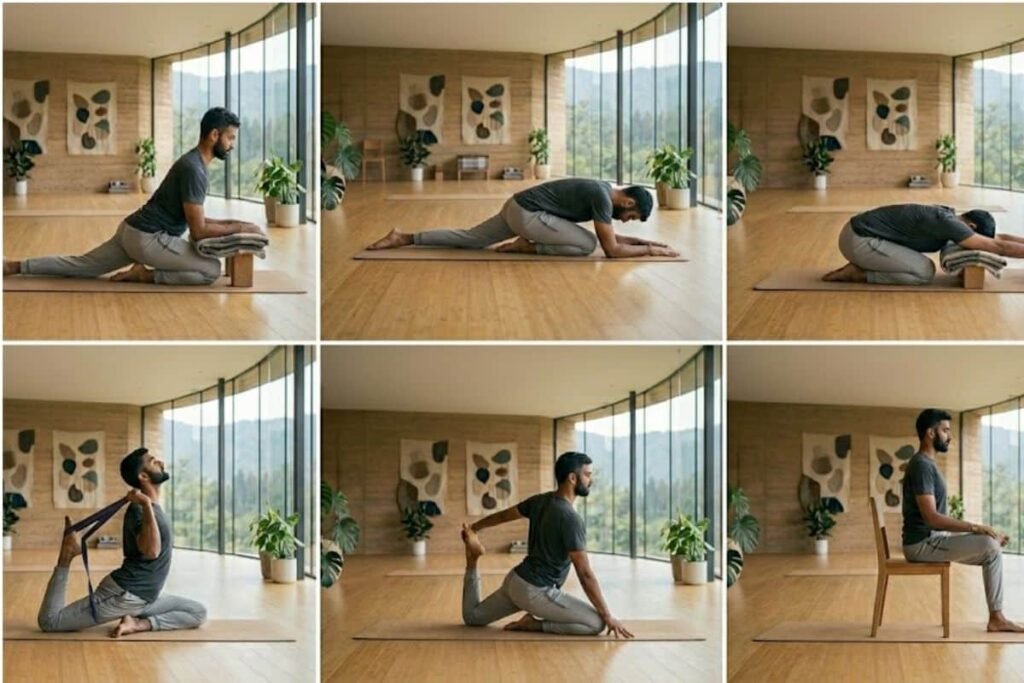
Classic Yoga Pigeon Pose:
The classic version focuses on an upright torso and a deep stretch through the back leg hip flexor. You keep your hands on the mat for support while lifting your chest high to create a gentle backbend. This variation is perfect for building strength in the spine while opening the front of the body effectively.
Resting Yoga Pigeon Pose:
In this version you fold your upper body forward over your bent leg and rest your forehead on the floor. It allows for a more passive stretch that uses gravity to deepen the opening of the outer hip and glutes. Many people find this variation very relaxing and stay here for several minutes to calm the nervous system.
King Yoga Pigeon Pose:
This is an advanced variation that involves bending the back knee and reaching back to grab your foot with your hands. It requires intense flexibility in the shoulders chest and hips to achieve the full bind and backbend. You should only attempt this once you have mastered the basic versions and feel completely stable in your base.
Reclined Yoga Pigeon Pose:
Also known as the figure four stretch this is performed while lying on your back with your legs crossed. It is the safest option for individuals with knee issues because it gives you total control over the intensity of the stretch. You simply pull your legs toward your chest until you feel a deep and satisfying release in the hip.
Elevated Yoga Pigeon Pose:
Using a chair or a bench for this pose makes it a great option for a quick stretch during a work break. You place one leg across the elevated surface while standing on the other leg to target the glutes without hitting the floor. It is highly effective for maintaining hip health when you do not have access to a yoga mat or much space.
Why Proper Alignment Matters In Yoga Pigeon Pose?
Safe alignment protects your ligaments and ensures that the stretch is happening in the belly of the muscle rather than the joint. When you align your body properly you maximize the flow of oxygen and energy through the targeted areas for better results.
Misalignment can lead to long term issues in the knees or sacroiliac joint which defeats the purpose of the healing practice. Using props like blocks or blankets can help you maintain the right form while your body gradually opens up.
High quality alignment creates a stable structure that allows your mind to relax and focus on the breath.
How To Use Props For Yoga Pigeon Pose?
If your hips are far from the floor you can place a folded blanket or a block under the glute of your bent leg. This provides the necessary support to keep your hips square and prevents your body from collapsing to one side.
You can also rest your forehead on a block during the resting version if the floor feels too far away. Props are not a sign of weakness but rather a smart way to customize the practice to fit your unique anatomy.
They allow you to stay in the pose longer and experience a deeper release without any physical or mental strain.
Benefits Of Yoga Pigeon Pose:
The primary advantage of this movement is its ability to deeply stretch the psoas and piriformis muscles which are crucial for hip health. By opening these areas you can experience a significant reduction in chronic lower back pain and sciatica discomfort.
It also stimulates the internal organs in the lower abdomen which helps in better digestion and metabolic function. Many practitioners feel an emotional release during the hold because the hips are known to store stress and tension.
This makes the practice not just a physical exercise but also a way to clear your mind and find inner peace.
Read More How to Do bird of paradise yoga (Svarga Dvidasana)
What Are Common Mistakes In Yoga Pigeon Pose And How To Avoid Them?
- Tilting Hips To One Side: Many practitioners let their weight collapse onto the outer hip of the bent leg which misaligns the spine and reduces the effectiveness of the stretch. You can avoid this by keeping your weight centered and using a yoga block or folded blanket under your hip for extra support.
- Forcing The Front Shin Parallel: Attempting to force your front shin to be perfectly parallel to the top of the mat when your hips are tight puts dangerous pressure on your knee joint. Instead you should keep your heel closer to your groin and only move the foot forward as your flexibility naturally increases over time.
- Rounding The Lower Back: Slumping forward without engaging the core can lead to compression in the lower back and neck strain during the hold. Focus on lengthening your spine and keeping your chest open as you lower down to ensure a safe and productive stretch for your entire body.
- Holding The Breath: Tension often leads to shallow breathing or holding the breath which makes the muscles tighten up instead of relaxing into the pose. You must focus on deep and steady inhales and exhales to signal your nervous system that it is safe to release the deep tension in your hips.
- Ignoring Sharp Pain: Pushing through sharp or stabbing sensations in the knee or hip can cause serious ligament damage or muscle tears. Always listen to your body and back out of the stretch immediately if you feel anything other than a dull and manageable muscle pull.
Conclusion:
Practicing yoga pigeon pose is a transformative journey that brings balance and openness to your entire lower body. This guide provides you with the essential steps and variations to explore this powerful movement at your own pace.
By focusing on correct alignment and consistent effort you will unlock new levels of physical freedom and mental clarity.
Remember to be patient with yourself and enjoy the process of opening your hips one breath at a time. This posture is a gift to your body that promotes longevity and vitality for years to come.
FAQs:
What is pigeon pose good for?
Pigeon pose is good for opening tight hips and improving flexibility in the lower body.
It also helps reduce stress and lower back tension while supporting better posture and relaxation.
Can I do this stretch without a yoga mat?
You can perform this movement on a carpet or a firm rug as long as you have enough cushioning for your knees. The important thing is having a non slip surface so your legs stay stable while you focus on the stretch.
Is yoga pigeon pose safe for people with bad knees?
You should practice the reclined version on your back to avoid putting direct pressure on the knee joint while stretching. This modification provides the same hip benefits without risking further injury to your sensitive knees.
Who should not do pigeon pose?
People with knee injuries or severe hip problems should avoid pigeon pose because it can increase joint pressure.It is also not recommended for those with recent surgeries or strong lower back pain without medical guidance.
